

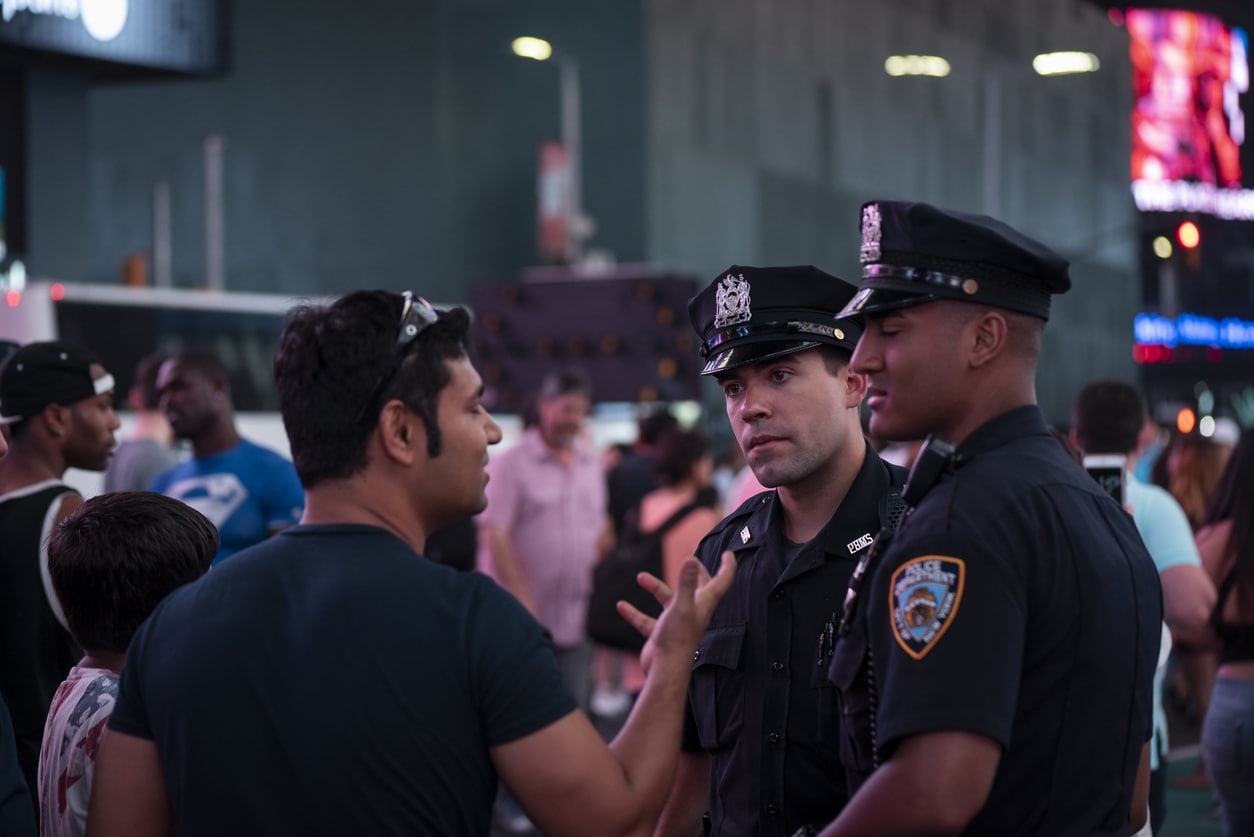
Most departments start planning for a parade, festival, or large public event weeks in advance. Traffic routes get mapped. Overtime shifts get assigned. Mutual aid requests go out to neighboring agencies. What often gets left off that checklist is a review of law enforcement insurance and whether it still applies the way agencies assume it does once officers step outside their normal shift and jurisdiction.
Public events create a different risk profile than a routine patrol shift. Officers work longer hours, cover unfamiliar territory under mutual aid agreements, and face physical risks that come from crowd movement rather than direct confrontation. None of that shows up in a typical incident report until something happens and an agency finds out its coverage didn’t follow the officer as it expected.
What Changes When Officers Work Mutual Aid at a Public Event?
Large public gatherings routinely pull officers from outside the host department. The International Association of Chiefs of Police confirms that when mutual aid is activated, incoming officers operate under the requesting agency’s command and follow its policies for the duration of the assignment.
That coordination covers use of force, uniform standards, and communication protocols. It does not automatically answer a separate question: Whose insurance coverage applies to a visiting officer working someone else’s event? An officer on loan for a festival or parade is often technically off their home department’s clock and not yet fully absorbed into the host agency’s normal coverage structure.
Specialized coverage closes the gap. Because it follows the officer rather than the shift or the jurisdiction, coverage applies whether the officer is working a home patrol or a mutual aid assignment, or technically off duty between shifts. For departments that send officers to cover other agencies’ events or bring in outside officers for their own events, that continuity removes a question that would otherwise have to be sorted out on a case-by-case basis.
The Injuries That Don’t Make the News
Crowd duty rarely generates a headline the way a use-of-force incident does, but it produces its own steady set of physical demands. Standing for extended shifts, moving through dense crowds, and reacting quickly to sudden changes in crowd behavior all carry a real risk of falls, strains, and overexertion injuries unrelated to violence.
Accident and health (A&H) insurance is built for exactly this kind of injury. Provident’s A&H coverage pays weekly total and partial disability benefits for up to five years, with first-week disability payments, so an officer doesn’t wait out a standard elimination period before income protection kicks in. Cost-of-living adjustments help that income keep pace during a longer recovery. None of that depends on whether the injury happened during a violent encounter or a 12-hour shift managing a parade route.
Overtime Shifts and Coverage Gaps Agencies Overlook
Departments often stack overtime or temporarily reassign officers to cover a large event, and that shift in duty status doesn’t always trigger a review of how coverage classes apply. An officer pulled from a desk assignment to work event security, or one picking up overtime beyond their normal schedule, may fall into a different coverage question than the department assumes.
Before a major scheduled event, it’s worth confirming a few specifics with department clients.
- Classification: Does temporary reassignment or overtime status change how an officer is classified under the current policy?
- Mutual aid status: If the department sends officers to another agency’s event, or receives them, does 24-hour accidental death and dismemberment (AD&D) and A&H coverage extend the same way in both directions?
- Benefit limits: Do current limits reflect the realities of an extended, physically demanding multi-day event rather than a standard shift?
These kinds of questions are far easier to answer before an event than after an injury.
Reviewing Coverage Before the Event, Not After the Incident
Public events introduce exposures that standard patrol coverage doesn’t always anticipate: officers working outside their home jurisdiction, physical strain from crowd duty, and shifting duty status due to overtime or reassignment. None of it requires a violent incident to become a real coverage question.
Building an event-season review into the annual conversation with law enforcement clients gives agents a concrete way to add value beyond a standard policy renewal. Reach out to Provident to walk through how 24-hour AD&D and A&H coverage apply across mutual aid assignments and extended event duty before the next parade or festival lands on a department’s calendar.
FAQ on Event Risk for Law Enforcement
Does law enforcement insurance cover officers working outside their home department?
With 24-hour AD&D coverage, protection follows the officer rather than the jurisdiction or shift, which is why it applies during mutual aid assignments as well as an officer’s normal duty.
Do officers need different coverage for large public events compared to regular patrol shifts?
The coverage type doesn’t change, but agencies should confirm that classification, benefit limits, and mutual aid provisions reflect the realities of an extended event rather than a standard shift.
What kind of injuries does A&H insurance cover during event duty?
A&H coverage responds to a broad range of injuries, including falls, strains, and overexertion that happen during crowd management duty, not only injuries from direct confrontation.
About Provident
Founded in 1902, our company has a rich history, including the creation of custom firefighter insurance benefits in 1928. Today, Provident continues to be a pioneer in developing insurance programs for firefighters, EMS providers, municipal entities, and law enforcement. In addition, we provide Special Risks insurance for various volunteer and nonprofit groups. Give us a call today at (412) 963-1200 to speak with one of our representatives.