

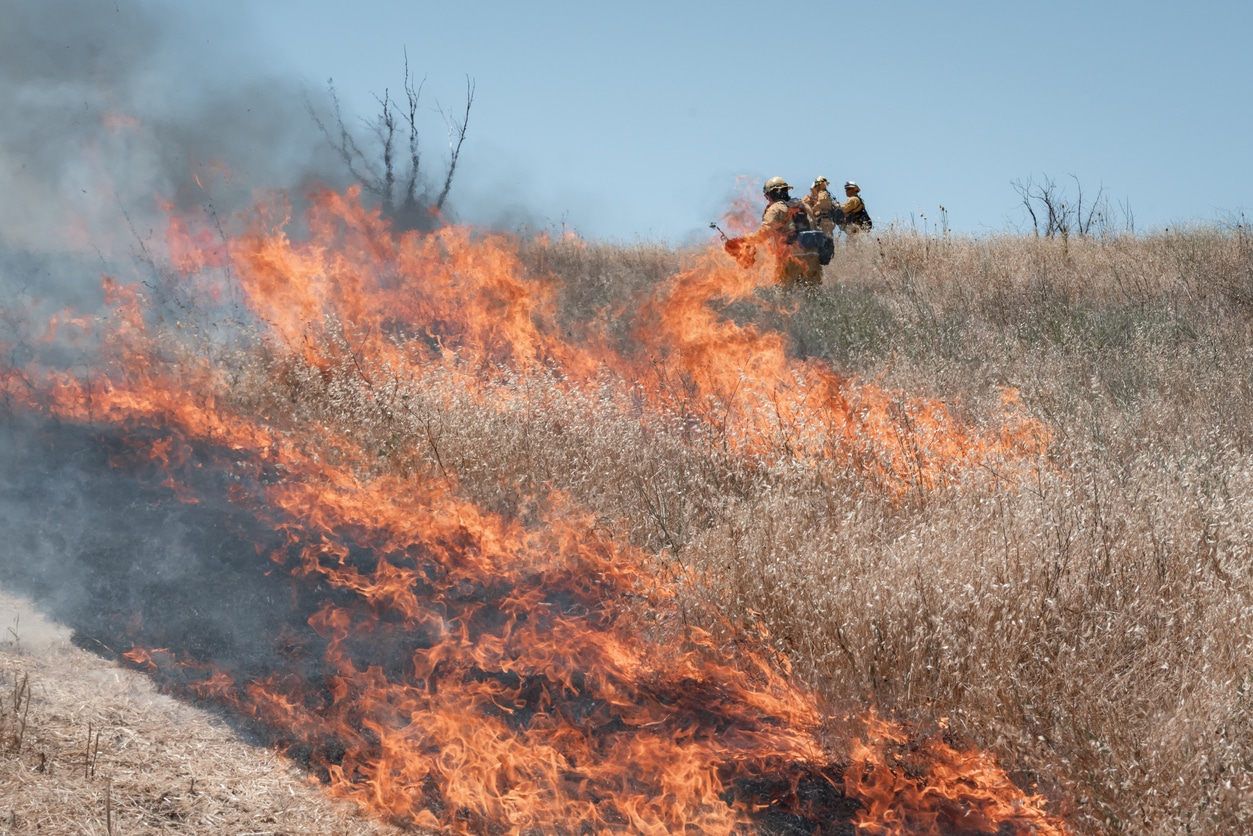
Ask most departments what summer risk means, and the answer usually starts and ends with fireworks and wildfire season. Summer is when call volume climbs across the board: heat emergencies, brush fires, mutual aid requests, and the everyday grind of a busier dispatch board. That volume itself creates compounding risk well before a major incident occurs, which is exactly why fire department insurance needs to match the season’s real pattern rather than just its headline events.
Why Summer Call Volume Strains More Than Staffing
Overexertion, heat exposure, and slips and falls are not rare occurrences that show up only during a heat emergency call. According to the National Fire Protection Association’s Municipal Firefighter Injuries on the Fireground report, municipal firefighters experienced an estimated average of 20,480 non-fatal fireground injuries per year from 2020 through 2024, with exposure to hazards such as heat, smoke, and toxic agents, along with overexertion, strain, slips, trips, and falls, ranking as the leading causes.
The National Volunteer Fire Council adds important context on why summer heat compounds that risk. As core body temperature rises during suppression activity, motor control and cognitive function both degrade, which raises the odds of an injury occurring, not just the severity if one does.
For agents, this is as much an income-replacement and accident-and-health discussion as a life insurance one. An overexertion or heat-related injury can sideline a member for weeks, even when nothing life-threatening occurred. Accident and health insurance (A&H) fills that specific gap, paying benefits for the kind of routine, cumulative fireground injuries that summer heat makes more likely, regardless of whether a claim involves a structure fire or a heat-exhaustion incident on a brush call.
What Happens to Coverage When Mutual Aid Crosses Jurisdictions?
Summer also means more mutual aid. Departments lean on neighboring agencies during peak call periods, and members cross jurisdictional lines to help cover calls their own district cannot handle alone. Agents should be ready to answer: Does coverage travel with a member responding to a mutual aid call outside their home department’s district?
24-hour accidental death and dismemberment (AD&D) is built around that exact scenario. Because coverage applies anywhere in the world, on duty or off, a member responding to a mutual aid request is protected the same way they would be on a call within their own district. That continuity matters more in summer, when mutual aid runs happen more often and departments cannot always predict which member ends up covering which call.
Increased call volume also means increased wear on apparatus and gear, simply from more frequent responses and longer runs. That equipment strain deserves attention in its own right, even without expanding into a full property and casualty conversation here.
Staffing Gaps Are a Risk, Too
As summer call volume increases, volunteer and part-time staff may pick up extra shifts, raising a coverage question that departments do not always consider. When a member takes on more hours than usual or moves into a role they do not normally fill, does their coverage class or eligibility change as a result?
Agents should confirm with department clients whether seasonal or auxiliary responders are properly classified before a busy stretch turns a coverage gap into a claims issue. The First Responder Assistance Program is also worth mentioning here. This program offers confidential support resources that can help address extended summer schedules and fatigue from a heavier call load.
Building Coverage That Matches the Season, Not Just the Headlines
Summer risk for fire departments is broader and more routine than fireworks-day coverage suggests. It is a season-long pattern of elevated call volume, heat-driven injury risk, and shifting staffing status, and each of those pressures maps to a specific piece of coverage.
Reviewing A&H, AD&D, and classification structures with department clients before peak season arrives gives agents a way to close gaps before an incident forces the conversation. Contact Provident today to walk through how these coverages apply across a department’s busiest months.
About Provident
Founded in 1902, our rich history involves the creation of custom firefighter insurance benefits in 1928. Today, Provident continues to be a pioneer in developing insurance programs for firefighters, EMS providers, municipal entities, and law enforcement. In addition, we provide Special Risks insurance for various volunteer and nonprofit groups. Give us a call today at (412) 963-1200 to speak with one of our representatives.